Net mesh size is one of the most important numbers on a practice net listing, and one of the easiest to misread. If the mesh is too large, balls slip through or get stuck halfway. If it is much smaller than needed, the net may be heavier and catch more wind than it has to. This guide explains how mesh size is measured, how to match it to the ball you use, and what to check before buying.
How mesh size is measured
Mesh is usually described in one of two ways, and sellers do not always say which one they use.
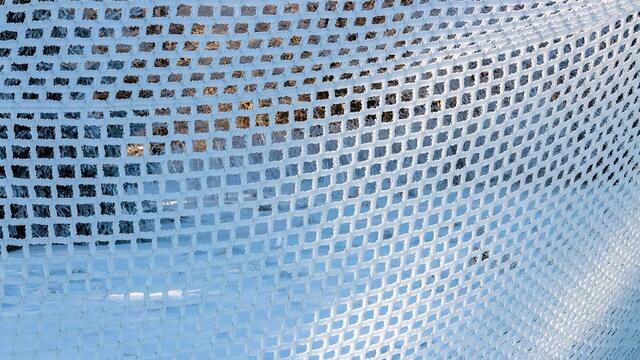
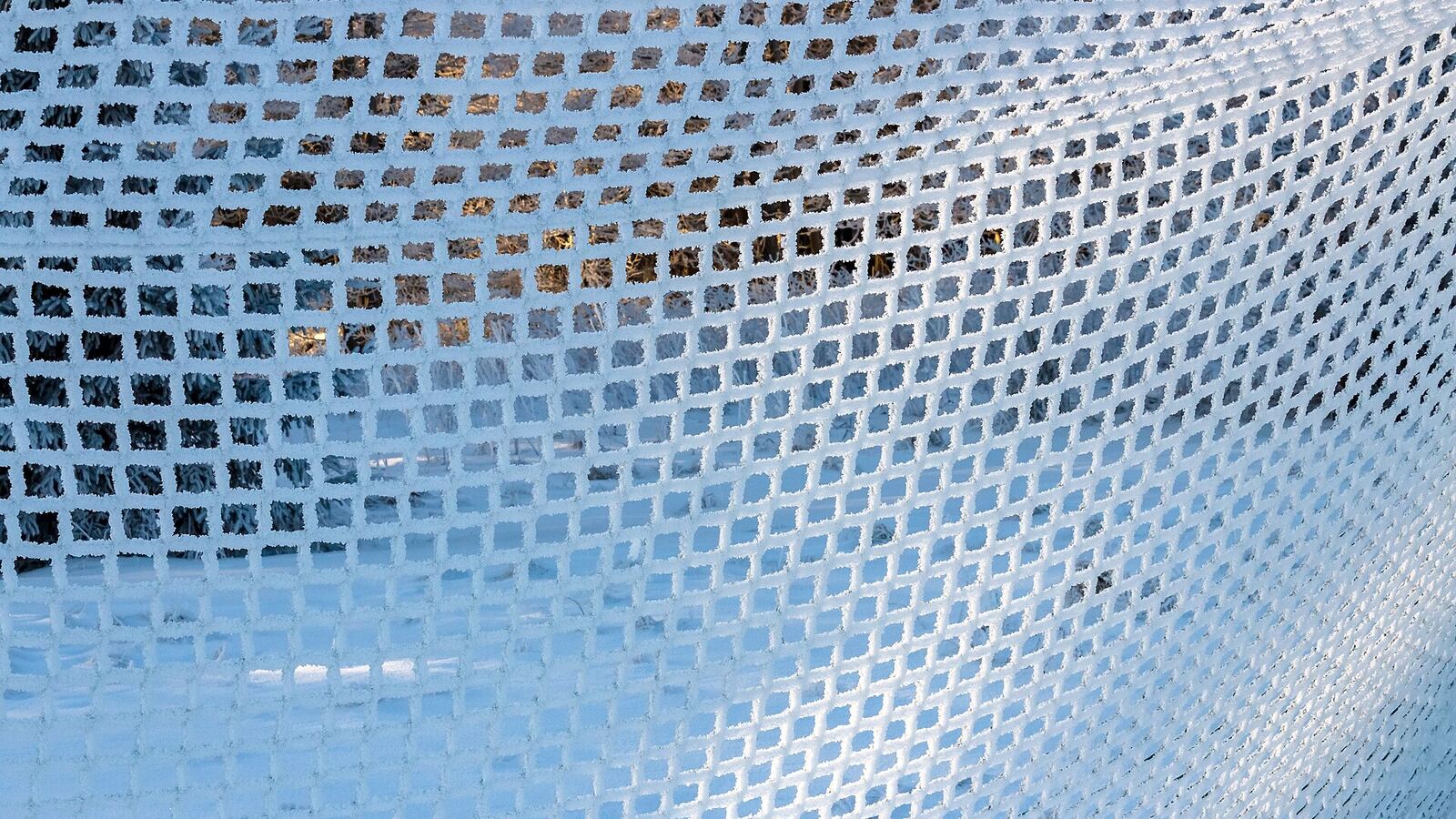
- Square (side) measurement. The length of one side of a mesh square, measured from the centre of one knot or joint to the next. A "25 mm" mesh measured this way is roughly a 25 mm square.
- Stretched (diagonal) measurement. The mesh is pulled tight and measured corner to corner along the diagonal. Because of this, the same net can be described with a larger number. A stretched measurement is often roughly double the side measurement.
Some listings give the mesh in inches (for example 3/4 inch or 1 inch), others in millimetres or centimetres. Before you buy:
- Check whether the listing says "square", "side", "stretched" or "diagonal".
- If it does not say, ask the seller or look for photos with a ruler next to the mesh.
- Read reviews from buyers using the net for the same ball.
The basic rule: mesh smaller than the ball
The opening needs to be clearly smaller than the ball's diameter, with a margin. Netting stretches under impact, and a fast ball can push into a mesh opening that looks safe when the net is hanging still. Soft or deformable balls, like foam balls, can squeeze through openings that a hard ball of the same size would not.
Some ball sizes for reference:
- Golf ball: the Rules of Golf set a minimum diameter of 1.68 inches (42.67 mm).
- Baseball: an official baseball is 9 to 9.25 inches in circumference, which works out to a diameter of roughly 73 to 75 mm (about 2.9 inches).
- Tennis ball: standard tennis balls are about 6.5 to 6.9 cm in diameter.
Softballs, footballs, basketballs and volleyballs are much larger, so they can use far bigger mesh. Smaller balls such as table tennis balls, squash balls or plastic practice balls need much finer mesh.
Choosing mesh size by sport
Use this table as a starting point. It shows the size of the ball you are stopping, not a specific mesh recommendation, because the safe margin depends on ball speed, twine thickness and how tight the net hangs.
| Sport / ball | Ball size to beat | What to look for |
|---|---|---|
| Golf | 42.67 mm minimum diameter | Mesh clearly under ball size, heavier twine, ideally a backup layer |
| Baseball | About 73–75 mm diameter | Mesh well under ball size; check what batting cage listings recommend for baseball |
| Softball | Larger than a baseball; varies by size | Mesh suitable for baseball usually works too |
| Tennis / pickleball | About 6.5–7.5 cm | Mesh well under the ball diameter |
| Cricket | Varies by ball size and type | Mesh suited to hard balls, heavier twine |
| Football / soccer, basketball, volleyball | Much larger balls | Larger mesh is fine; prioritise strength and wind |
| Foam or plastic practice balls | Varies widely | Fine mesh, because soft balls can squeeze through |
If a net is sold for a specific sport, the seller has usually chosen the mesh for that ball. Problems mostly come from using a net for a smaller ball than it was designed for. For example, a football goal net will not stop a golf ball or a hockey ball.
Why smaller mesh is not always better
It is tempting to buy the smallest mesh available, but there are trade-offs:
- Wind load. Finer mesh catches more wind, so large nets can act like a sail. This matters most for tall barrier netting. See how to anchor a practice net in wind.
- Weight. More twine per square metre usually means a heavier net, which can be harder to hang.
- Visibility. Finer, denser mesh can be harder to see through, which matters for spectators or when the net sits in front of a view.
The aim is mesh that is safely smaller than the ball, with twine strong enough for the speed of impact.
Mesh size and twine work together
Mesh size and twine thickness should be considered together. A small mesh made from thin twine can still tear under repeated hard hits, while a slightly larger mesh with heavy twine might cope better with a larger ball. Our guide to sports net materials explains how nylon, polyethylene and polyester behave and how twine thickness is described.
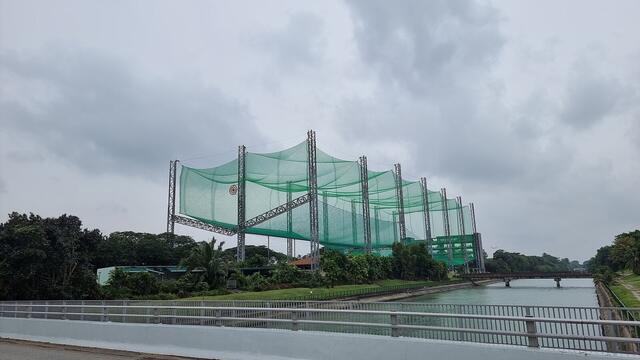
For high-impact sports like golf and baseball, many people add a second layer of netting a short distance behind the main net. If a ball does find a weak spot, the backup layer offers another chance to catch it. This is a sensible extra step, but no net setup can be guaranteed to stop every ball.
Checking a listing step by step
- Identify the smallest, hardest ball that will hit the net.
- Find the mesh size and how it is measured on the listing.
- Compare the opening with the ball diameter, leaving a clear margin.
- Check twine thickness and material.
- Look at buyer photos and reviews, ideally from people using the same ball.
- Check the seller rating and return policy in case the mesh is not as described.
Our AliExpress buying checklist covers these and other checks, and the multi-sport practice net guide explains how to choose mesh when one net will be used for several sports.
Frequently asked questions
What mesh size do I need for a golf net?
The mesh needs to be clearly smaller than a golf ball, which has a minimum diameter of 1.68 inches (42.67 mm). Most nets sold specifically for golf use mesh designed for this, but check how the mesh is measured and look for heavier twine and a backup layer.
Can I use a football goal net to stop golf balls?
Usually not. Football nets are designed for a much larger ball and often have mesh openings big enough for a golf ball to pass through or get stuck. Use netting designed for golf.
What is the difference between square and stretched mesh size?
Square mesh measures one side of the mesh opening. Stretched mesh measures the diagonal when the mesh is pulled tight, so the number is larger for the same net. Check which one a listing uses before comparing nets.
Will a baseball net stop softballs?
Generally yes, because softballs are larger than baseballs. Make sure the twine is strong enough for the speed of your hitting and pitching.
Does smaller mesh make a net stronger?
Not on its own. Strength depends mainly on twine thickness and material. Smaller mesh mainly affects which balls can pass through, how heavy the net is and how much wind it catches.
Ready to set up your practice space?
Browse sports practice nets and compare sizes on AliExpress.
Some links on this page are affiliate links to AliExpress. If you buy through them we may earn a small commission at no extra cost to you. We don’t test or endorse individual listings, so always check the seller, sizes and return policy. Learn more.