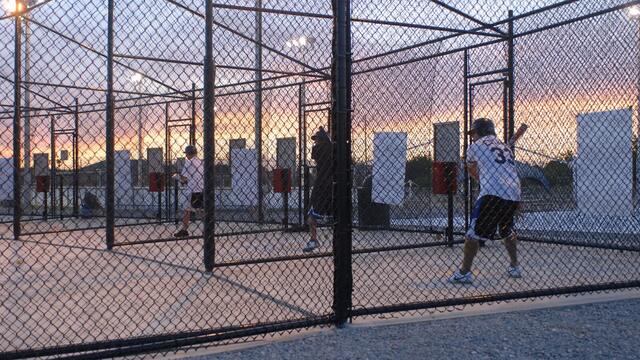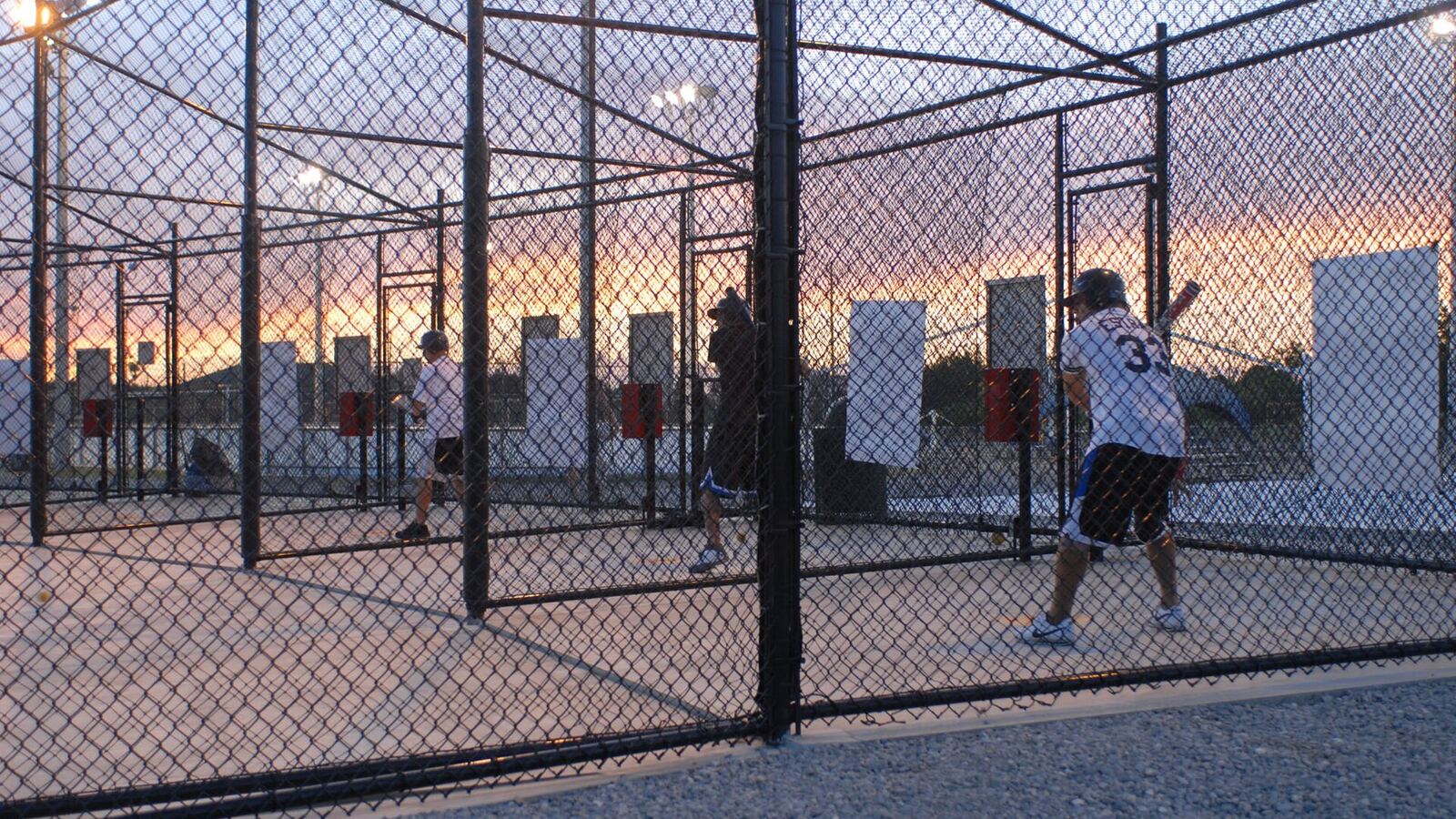
A backyard batting cage net can give a player somewhere to hit almost every day, without waiting for field time. It is also a bigger commitment than most practice nets: it needs space, a sturdy frame, careful anchoring and sometimes a conversation with neighbours or the local council. This guide covers what to know before you buy a backyard batting cage net, so you can plan a setup that fits your yard and your player.
Is a full cage the right choice?
Before committing, consider what you actually need. A full cage encloses the hitter on the sides and top, which lets you use a pitching machine or live pitching in a controlled space. If the player mostly hits off a tee or does soft toss, a smaller hitting net might do the job. Our comparison of a hitting net vs batting cage goes into the trade-offs.
A full cage makes more sense when:
- You have the length for front toss or machine pitching.
- You want to contain balls hit in many directions.
- The setup will stay up for a season or longer.
Planning your space
Cage sizes vary widely, so measure carefully. You will need:
- Length for the pitching or feeding distance plus room behind the hitter and catcher area.
- Width for a full swing with clearance from the side netting.
- Height enough for the swing and for balls hit upward.
- Clearance around the cage for anchoring lines, walking access and maintenance.
Also look at the ground. A level surface makes it easier to set up the frame and gives the hitter consistent footing. Many people add turf or a mat at the plate area.
Netting: what to compare
The net is what takes every hit ball, so read descriptions carefully.
| Factor | What to consider |
|---|---|
| Material | Common options include nylon and polyethylene, which behave differently in sun and wet weather |
| Twine thickness | Often listed as a gauge or thickness; thicker twine may be more durable but heavier |
| Knotted or knotless | Affects feel, weight and how holes are repaired |
| Mesh size | Must be small enough to stop a baseball or softball |
| UV treatment | Can help slow sun damage on nets that stay outside |
| Edge binding | Reinforced borders help hang and tension the net |
Our sports net material guide and net mesh size guide explain these in more detail. Check that the listing states the net is intended for baseball or softball use.
Frames: net-only vs complete kits
Batting cage nets are often sold either as net only or as net plus frame.
- Net only suits people who already have a frame, posts or a cable system, or who plan to build one. It means extra work but more flexibility.
- Frame kits include poles and connectors. Check the frame material, how the corners connect, and whether the listing shows the assembled shape clearly.
Whichever route you choose, confirm the net and frame dimensions match. A net that is too small will not fit; one that is far too big may sag excessively.
Anchoring and tension
A cage acts like a large sail in the wind. Plan to:
- Use ground stakes or anchors suitable for your soil.
- Run guy lines where the design calls for them.
- Leave some slack in the netting so balls are absorbed rather than bounced back hard.
- Check anchors after storms and during windy spells.
Our guide on how to anchor a practice net in wind covers practical methods.
Inside the cage: useful extras
- Protective L-screen for anyone feeding balls or pitching inside the cage.
- Home plate and hitting mat to define the batter's box and protect the turf.
- Batting tee for tee work.
- Baffle or divider net to keep balls from rolling back to the hitter's feet.
- Ball bucket to keep the floor clear.
Check local rules and neighbours
A large structure in a garden can be subject to local rules, such as homeowner association guidelines or planning regulations. Requirements vary by location, so check before you buy, especially for tall or permanent setups. It is also courteous to talk to neighbours about noise and placement.
Safety considerations
A batting cage reduces risk but does not remove it. No net is guaranteed to stop every ball. Sensible habits include:
- Anyone pitching or feeding inside the cage stands behind a protective screen.
- Batters wear a helmet when facing pitches or machine-fed balls.
- Only the people who need to be in the cage are in it.
- Inspect netting and frame regularly and repair holes promptly.
- Keep bats away from the hitter's area when they are not hitting.
Our safety page has more general guidance.
Care and storage
Sun and weather are the main causes of wear. If possible, take the net down or cover it in the off-season, dry it before storing to avoid mildew, and keep it away from sharp edges. See our guide to sports net care and UV protection.
Pre-purchase checklist
- Measure length, width, height and clearance.
- Decide on net only or net plus frame.
- Confirm material, mesh size and twine description.
- Plan anchoring for your ground and wind exposure.
- Budget for an L-screen, mat and tee.
- Check local rules and talk to neighbours.
- Read seller ratings, reviews and the return policy before ordering.
For more ideas, visit the baseball and softball category or try our pitchback rebound net drills for fielding.
Frequently asked questions
How big does a backyard batting cage need to be?
It depends on how the player will use it. Tee and soft toss work need far less length than machine or live pitching. Measure your space and compare it with the assembled dimensions in each listing, leaving extra room for anchoring and access.
Can I buy just the net and build my own frame?
Yes, many cage nets are sold on their own. Make sure the net's dimensions match your frame and that you have a reliable way to hang and tension it.
Do I need a permit for a backyard batting cage?
Rules vary by location and by the size and permanence of the structure. Check with your local authority or homeowner association before installing.
Can I leave a batting cage net up all year?
Some people do, but sun and weather can shorten the net's life. Taking it down or covering it when not in use can help it last longer.
Ready to set up your practice space?
Browse baseball pitching nets and compare sizes on AliExpress.
Some links on this page are affiliate links to AliExpress. If you buy through them we may earn a small commission at no extra cost to you. We don’t test or endorse individual listings, so always check the seller, sizes and return policy. Learn more.