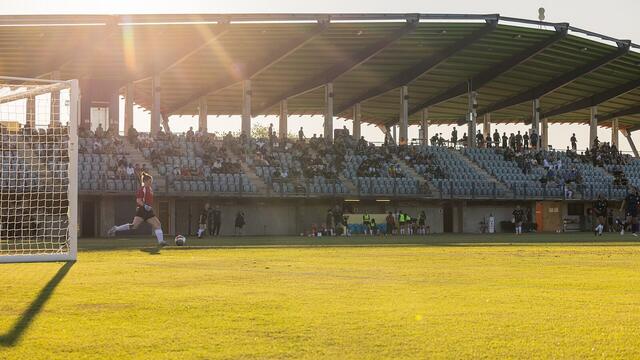
Soccer target net drills are one of the simplest ways to turn "just shooting at the goal" into focused finishing practice. A goal is big, and a shot that sneaks in near the middle feels like a success even when it would be an easy save in a match. A target net or a set of corner targets shrinks the goal down to the areas keepers struggle to reach, so every shot gives you honest feedback.
This guide covers how to set up a target net, a progression of shooting accuracy drills, and how to fit them into a weekly routine whether you train alone, with a friend or with a youth team.
Why target nets help shooting accuracy
A target net is usually a sheet that clips or ties onto a goal frame with holes cut in the corners, or a set of separate pocket targets that hang in the top and bottom corners. Either way, the idea is the same: the ball only "counts" if it goes where a goalkeeper is least likely to be.
That changes how players practise in a few useful ways:
- Clear feedback. You know straight away whether the shot was on target or not, without needing a keeper or a coach to judge it.
- Placement over power. When the target is small, players naturally slow down and focus on technique, body shape and contact.
- Easy scoring games. Holes and pockets make it simple to keep score, which keeps kids and adults engaged for longer.
If you are still deciding between a full sheet and separate corner pockets, our comparison of goal target sheets vs corner targets goes into the pros and cons.
Setting up your target net
Before the drills, get the setup right:
- Check the fit. Target sheets are sold for specific goal sizes. A full-size goal is 7.32 m x 2.44 m (8 yd x 8 ft); backyard and youth goals vary a lot, so measure your frame before buying. Our backyard soccer goal size guide explains the common options.
- Tension it evenly. A sheet that sags will deflect shots and change the size of the holes. Use every tie point.
- Anchor the goal. Any goal, especially a lightweight or portable one, should be pegged or weighted so it cannot tip. Never let anyone hang on the crossbar. See our safety page for general guidance.
- Mark your shooting spots. Cones or flat markers at set distances make it easy to track progress from week to week.
When comparing listings, check the stated goal size the sheet fits, the hole dimensions, the material, and how it attaches. Read recent reviews and the seller's return policy before ordering.
Soccer target net drills: a progression
Work through these roughly in order. Move on when you can hit the target consistently, not just occasionally.
1. Stationary placement from close range
Start 8–10 m (about 9–11 yd) from goal with the ball still. Use the inside of the foot to pass the ball into the bottom corners. Focus on planting the standing foot beside the ball, pointing it at the target, and following through towards the corner.
Goal: a set number of hits out of ten on each side. Track it.
2. Laces from the edge of the box
Move back to around the edge of the penalty area. Strike with the laces, keeping the knee over the ball and the body leaning slightly forward to keep the shot low. Aim at bottom corners first; top corners come later.
3. Shoot off one touch
Take a touch out of your feet before every shot, either to the left or right. This adds the realistic step of setting the ball up. Alternate directions so you practise opening up and shooting across the body.
4. Pass and finish
With a partner or a rebounder, play a pass, receive the return and shoot first time or after one touch. If you train alone, a football rebounder net can provide the return pass.
5. Weaker-foot rounds
Repeat drills 1–3 using only the weaker foot. Lower your target number at first. Most players find accuracy drops sharply on the weaker side, which is exactly why it is worth practising.
6. Top-corner finesse
Curl shots into the top corners using the inside of the foot, wrapping around the ball. Start close and only move back once you can lift the ball reliably without it flying over.
7. Turn and shoot
Stand with your back to goal, receive a pass or roll the ball to yourself, turn and shoot. This links first touch, body position and finishing in one movement.
8. Pressure rounds
Add a time limit, such as five balls in 30 seconds, or play a game where a miss resets your score. Pressure helps bridge the gap between relaxed practice and matches.
Scoring games to keep it fun
Target nets work best when there is something to play for. Some simple ideas:
- Around the world: shoot from five spots in an arc; you must hit a target from each spot to move on.
- Corner points: bottom corners score 1, top corners score 2. First to 15 wins.
- Call your corner: say which target you are aiming at before you shoot. Only the called target counts.
- Knockout: players take turns; anyone who misses twice in a row is out.
For younger players, see our list of target games for kids using practice nets.
A sample weekly finishing routine
You do not need long sessions. A short, focused block two or three times a week can be more useful than one long session of random shooting.
| Session part | Time | Focus |
|---|---|---|
| Warm-up and passing | 5–10 min | Light passing, touches, dynamic stretches |
| Stationary placement | 10 min | Both feet, bottom corners |
| Moving shots | 10 min | One touch then shoot, pass and finish |
| Scoring game | 10 min | Corner points or call your corner |
| Cool-down | 5 min | Easy touches, collect balls |
Adjust the times to the player's age and fitness. Stop if anyone feels pain, and build up shooting volume gradually rather than taking a huge number of hard shots in one go.
Common mistakes
- Shooting from too far too soon. Distance makes accuracy harder. Earn the step back.
- Only using the stronger foot. It feels productive, but it hides a weakness.
- Blasting every ball. Placement drills are about control. Power can be added once technique is consistent.
- Ignoring the setup. A loose sheet or a goal that shifts after each shot gives misleading feedback and can be unsafe.
Choosing extras
Beyond the target itself, a few items make sessions smoother: a handful of balls of the right size, flat markers, and a rebounder if you often train alone. A ball return or backstop net behind the goal can save time chasing misses, especially in a garden.
Frequently asked questions
How far away should I stand for target net drills?
Start close, around 8–10 m, and only move back once you can hit the targets consistently. Younger players and beginners may need to start even closer. Accuracy matters more than distance early on.
Do target nets work on small backyard goals?
Yes, as long as the sheet or pockets are made for your goal size. Measure the inside width and height of your frame and compare it with the listing before ordering, since sizes vary between products.
Can I use a target net with a goalkeeper in goal?
Usually not with a full target sheet, because it covers the goal mouth. Separate corner pockets can sometimes stay up during keeper sessions, but take them down if they get in the way or create a risk of the keeper catching a hand or finger in the netting.
How often should I do shooting accuracy drills?
Two or three short sessions a week is a practical starting point for many players. Focus on quality repetitions, include rest, and fit sessions around team training and matches.
Ready to set up your practice space?
Browse football target nets and compare sizes on AliExpress.
Some links on this page are affiliate links to AliExpress. If you buy through them we may earn a small commission at no extra cost to you. We don’t test or endorse individual listings, so always check the seller, sizes and return policy. Learn more.